
Breaking the Thirty Year Deadlock:
Essay 1 - Why Have We Been Unable to Solve the Sustainability Problem?
August 2006
Why Have We Been Unable to Solve the Sustainability Problem?

Al Gore giving his slide show in An Inconvenient Truth, 2006. The movie focused on the top sustainability problem of them all: climate change. Behind Al is a model showing how the Gulf Stream flows, and how it will probably stop, as it did the last time in a similar situation, if the Greenland ice cap melts. The model covers the entire globe, which was rotating slowly. The Pacific Ocean side is shown. The Gulf Stream is part of a global current called the Great Ocean Conveyor Belt.
The movie is typical of the present approach to solving the sustainability problem. It attempts to win one mind at a time by telling the world the truth about the problem. But as decades of trying this approach have shown, it wins a few minds, but not nearly enough. There must be a better way.
It is certainly not for lack of trying. Nor is it for lack of brilliance. The environmental movement has attracted many of the sharpest minds on the planet, who have worked tirelessly for decades to solve the problem. They have educated the public about the magnitude and urgency of the problem, and what can be done to live more sustainably. They have lobbied and cajoled politician after politician. They have organized. And they have found countless new ways that environmental degradation can be reduced.
But none of this has worked.
As a result the question is no longer haunting just environmentalists. It is now lingering in the minds of concerned citizens all over the world. As each of them thinks about what they can do to help solve the most important problem in the world, the question repeats itself again and again: Why have we been unable to solve the sustainability problem? Why don't our leaders take action before it is too late?
Five years of work at Thwink.org on that question has led to a simple answer: The process does not fit the problem. It appears that without realizing it, environmentalists have been trying to drive a square peg into a round hole. It will not work.
The peg is the process being used to solve the problem. The hole is the problem. If they do not fit, then no amount of heroic effort, even by the brightest brains on the planet, will make them fit. To continue to try is an exercise in infinite futility.
Classic Activism Will Not Work
Our analysis shows that the reason the process does not fit the problem is that presently the environmental movement uses what can be called Classic Activism. This is a simple, easily learned process based on these four steps:
1. Identify the problem to be solved.
2. Find the proper practices, if they are not yet known.
3. Tell the people the truth about the problem and the proper practices.
4. If that fails, exhort and inspire the people to support the proper practices.
Examples of the proper practices needed to solve the sustainability problem are use of renewable energy, the three R's of reduce, reuse, and recycle, and closed loop manufacturing, which emits no net wastes and consumes no net non-renewable resources.
Classic Activism is the use of these four steps to solve all types of activist problems, by winning over one mind at a time with the truth. The reason that Classic Activism is so appealing is that it works. Sometimes.
It worked on the women's suffrage movement. It worked on civil rights. It worked on getting smoking banned in public places, and warning labels put on cigarette packages. In the environmental arena, it worked on the pesticide problem as the result of Silent Spring. It worked on greatly reducing city smog, making our drinking water safer, and cleaning up innumerable toxic waste sites.
And lo and behold, it worked on a global problem: the ozone layer depletion problem. This was the first serious international environmental problem to ever be solved. Suddenly there was hope. If we can solve one global problem, then why not the rest?
But this hope has been dashed on the rocks. Looming ahead are problems so huge that any of them will lead to global catastrophe if they remain unsolved. These problems include climate change, deforestation, soil deterioration, chemical pollution, freshwater depletion and pollution, abnormally high rates of species extinction, and natural resource depletion. These problems are all growing worse at exponential rates. None have a solution in sight.
The reason these problems remain unsolved is Classic Activism works only on easy problems. It fails on difficult problems because it cannot handle the phenomenon of change resistance, which occurs when the system resists change, no matter how hard you try. It is not the technical side of an environmental degradation problem that makes it difficult. We already have many viable technical solutions that will take us most of the way to sustainability. What makes a particular problem easy or difficult tends to be the amount of change resistance in it, or the social side of the problem. For example, local pollution problems tend to have low change resistance, while global ones have high resistance. As a result, we have solved a much higher percentage of local problems.
Classic Activism can handle mild change resistance with step 4. But it has no step whatsoever for handling strong change resistance. It also cannot handle problems that are so complex they require deep analysis to even begin to see a way forward, because Classic Activism has no analysis step. Thus, as soon as the sustainability problem morphs into one with more unsolved difficult problems that you can count, as it has in the last few years, classic activists are totally stuck. They have no way forward. They are as helpless as a carpenter without the tools he needs to get the job done.
The Only Way to Solve a Radically New Problem
Is a
Radically New Approach
It's a bold claim. But it's justified.
The process must fit the problem. The sustainability problem is an entirely new type of problem. It is not the same as the ones civilization has faced before. Therefore it cannot be solved by old ways of thinking, such as Classic Activism and brute force. Truly new problems do not yield to old solutions. Nor do they yield to old lines of attack. As Einstein long ago observed:
"The significant problems we face [today] cannot be solved at the same level of thinking we were at when we created them."
Until activists acknowledge this undeniable new truth, they will be as unable to solve the sustainability problem as alchemists were able to turn lead into gold.
Once activists are ready to move forward to a new level of thinking, they will make the same discovery that all of science made centuries ago:
There Is a Better Way

The great strength of the Scientific Method is once you start using it, you have installed a positive feedback loop on yourself and your organization. Over time this amplifies problem solving effort by several orders of magnitude. This occurs because the Scientific Method is the only known method for producing reliable new knowledge.
The Scientific Method consists of these five steps, which every serious analytical activist should memorize:
1. Observe a phenomenon that has no good explanation.
2. Formulate a hypothesis.
3. Design an experiment to test the hypothesis.
4. Perform the experiment.
5. Accept, reject, or modify the hypothesis.
In the 17th century science reinvented itself by discovery of a better way. It was not just a little better. It was radically better by several orders of magnitude. The new way was the Scientific Method. Science now had something it never had before: a way to create reliable new knowledge. The key was experimental proof. Now, at last, one body of knowledge could build on another and not collapse. It was now possible to build towers of knowledge that soared to such heights that science, and civilization, made advances that had previously seemed impossible. And it made them so fast that history witnessed one bold revolution after another: the Scientific Revolution, then the Industrial Revolution, and finally the Information Revolution.
Next will be the Sustainability Revolution. But this will come to pass only if environmentalists say goodbye to Classic Activism, and adopt a problem solving process that fits the problem.
Until this is done, environmentalists have no lever. Without the right lever they have no leverage. Archimedes said "Give me a lever long enough, and a place to stand, and I can move the world" for a reason. The right lever can move anything. In Archimedes' case he demonstrated that using the leverage obtained from a block and tackle (a multiple pulley system) he could move an entire ship with a single hand. In the case of science the right lever was the Scientific Method. Once they gave themselves the right lever, scientists were able to move all of civilization forward at a speed undreamed of by those who came before them.
The same could happen for environmentalists.
If you are sincerely interested in how to do this, then Thwink.org has much to offer you and your organization. But please be forewarned. The way forward is unconventional. It requires an open mind and the ability to ignore the criticisms of your fellow classic activists, as you proceed down a new path and they stay behind.
The place to start is to realize that if science can reinvent itself then so can environmentalism. All it takes is the right new foundation, which is:
Analytical Activism
Analytical Activism is the use of the Analytical Method to achieve activist goals. The Analytical Method is an analytical approach derived from the most successful problem solving process of all time: the Scientific Method. The Analytical Method can handle problems of any kind, no matter how difficult they may be, because the method is self-improving. It can evolve as needed to solve any problem.
Very briefly, the nine steps of the Analytical Method are:
1. Identify the problem to solve.
2. Choose an appropriate process.
3. Use the process to hypothesize analysis or solution elements.
4. Design an experiment(s) to test the hypothesis.
5. Perform the experiment(s).
6. Accept, reject, or modify the hypothesis.
7. Repeat steps 3, 4, 5, and 6 until the hypothesis is accepted.
8. Implement the solution.
9. Continuously improve the process as opportunities arise.
Compare this to the four steps of Classic Activism, which are:
1. Identify the problem to be solved.
2. Find the proper practices, if they are not yet known.
3. Tell the people the truth about the problem and the proper practices.
4. If that fails, exhort and inspire the people to support the proper practices.
Now compare Classic Activism to the main steps of Alchemy, which were:
1. Identify the problem to be solved.
2. Try one solution after another until you find something interesting.
3. Tell your fellow alchemists the truth about your discovery.
4. If they don't adopt it, then exhort and inspire them until they do.
There is more than a passing resemblance between Alchemy and Classic Activism. Why is this? Because both are based on guesswork, brute force, and endless attempts to convert others to your way of thinking. Is it any wonder that both of these processes achieved less than spectacular results?
Now compare them to the Analytical Method. Notice step 2, choose an appropriate process. This says that after you have correctly identified the problem, the most important thing to do next is to choose a process that fits the problem. Does Classic Activism or Alchemy have anything close to that step? No. Instead, they assume that one size fits all, that their same four steps will solve all problems of any kind, no matter what. This of course is a grand illusion, one worthy of a run in Las Vegas as the centerpiece of a magician's act.
But the Analytical Method has more to offer than that. Examine steps 3 to 7. This is the Scientific Method in a nutshell. Packed into the Analytical Method is the most potent problem solving process of them all. Again, does Classic Activism or Alchemy have anything close to this? No. But they don't know that, and so they blissfully behave as if they do. Classic activists all over the world have blindly assumed they know how to solve the sustainability problem, and that their solution will work. They have thousands of solutions, and promote all of them with the zeal of a preacher with nine aces. When their proposed solutions fail, as almost all of them have, do they see that as proof that their hypotheses were wrong? No. Instead they resolutely go back to Classic Activism's steps 2, 3, or 4 and try them again, only this time a little harder and somehow "better." But this will not work. No amount of effort will turn a false hypothesis into a true one.
The Alliance for Climate Protection
But classic activists continue to try again and again to make Classic Activism work anyhow. For example, the Alliance for Climate Protection is a new organization formed by Al Gore to capitalize on the momentum of the movie An Inconvenient Truth. The Alliance's key strategy is:
"The problem is not that we lack evidence or the economic and technical capacity to solve the problem, but that we lack the collective will to act. We must catalyze and fuel a national conversation about taking action, among a diverse set of constituencies and interests, to create the political imperative that is needed.
"Conditions are ripening to push this issue over the top and new voices are joining the call for action. This is a critical time to seize the momentum and forge a common commitment to meet the challenge this threat demands." - Source (August 11, 2006)
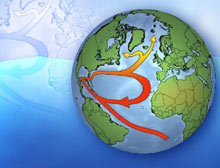
The Gulf Stream has already slowed down by 30% from 1957 to 2004. "Climate models suggest that if the Atlantic Conveyor shut down, temperatures in northwest Europe could drop by 4 to 6 degrees Celsius, or about 10 degrees Fahrenheit, in 20 years." Source
I have the greatest admiration for Al Gore's work. But let's be honest. This is Classic Activism. The phrase "we must" is an attempt to exhort and inspire. So is "conditions are ripening" and "This is a critical time." In fact, both paragraphs are no more than yet another way of saying that we must solve the problem or else. Is this anything new? Will it solve the problem? No. Even if some action is taken soon, it will probably be small token amounts, just enough so that the politicians involved don't lose votes because of this issue. But what is needed is a massive system reaction, one so aggressive that it solves the sustainability problem before certain critical thresholds are passed, such as ice cap melting and stoppage of the Gulf Stream.
Examine the Alliance for Climate Protection's strategy closely. Where is the evidence they have chosen a process that fits the problem? Where is the application of the Scientific Method to their hypothesis that this strategy will solve the problem? And where is the continuous improvement of their process, so that they can learn from mistakes and successes, and get better and better until their approach is good enough to solve the problem? In all cases, they are nowhere to be found.
The World Commission on Environment and Development

Also known as the Brundtland Report, this is the book that defined sustainable development as development that "meets the needs of the present without compromising the ability of future generations to meet their own needs." However, there is a slight problem with sustainable development. Given today's technologies and the levels of their implementation, it is impossible.
The Alliance for Climate Protection is not the only environmental organization to make mistakes like these. Thousands more have done the same over the years. For example, in 1987 the United Nations World Commission on Environment and Development published Our Common Future, a 400 page book on what to do about the environmental sustainability problem. The back cover gives an overview of the solution:
"Our Common Future serves notice that the time has come for a marriage of economy and ecology, so that governments and their people can take responsibility not just for environmental damage, but for the policies that cause the damage. Some of the policies threaten the very survival of the human race. They can be changed. But we must act now."
This is little more than the fourth step of Classic Activism, exhort and inspire the people to support the proper practices. But is it possible that buried inside the book is what we need? Sadly, no. There is no evidence of a formal analytical process to solve the overall problem. Instead, there is plenty of accumulation of data about the symptoms and immediate causes, and reviews of what has worked and what has not. There is also no evidence of the use of the Scientific Method to prove all key hypotheses. For example, the report makes this astounding claim on page xii:
"What is needed now is an era of economic growth—growth that is forceful and at the same time socially and environmentally sustainable."
However, using present practices, any economic growth only makes the problem worse. Thus only economic growth using sustainable practices will work. But no nation on earth is even close to using sustainable practices. Instead, they continue to use unsustainable ones. Thus the above claim calls for system behavior which is impossible. In other words, it is a false hypothesis.
Presently there is no such thing as economic growth that is sustainable. Therefore "sustainable development" is a catastrophic oxymoron. However, the (false) promise that sustainable development is possible is so alluring that the phrase has become official policy in most of the world. What the Brundtland Report really did was to make the sustainability problem worse, not better, by calling for "an era of economic growth" that is not sustainable.
The report's solution is to call for various "institutional and legal changes." Most are so vague as to be worthless, such as "A nation's foreign policy needs to reflect the fact that its policies have a growing impact on the environmental resource base of other nations and the commons," on page 314. On the same page the report outlines six areas "needed to make the transition to sustainability." But there is no evidence these will solve the complete problem. They are presented as being intuitively correct, rather than as the result of a long careful analysis, backed up by proof they will work. The six areas are "getting at the sources, dealing with the effects, assessing global risks, making informed choices, providing the legal means, and investing in our future."
However, none of these policies will be adopted until the change resistance part of the problem is solved. Why is it that society doesn't want to adopt sustainable practices? Why do politicians fail to pass the legislation needed to implement recommendations like these?
Furthermore, why is society taking such awkward command and control approaches to the proper coupling part of the problem? Presently the economic system is improperly coupled to the greater system it lives within: the environment. Once change resistance is overcome, only the most efficient coupling between the two systems will work in time to avoid environmental catastrophe.
Why aren't organizations like The World Commission on Environment and Development focusing on change resistance and ultra-high efficient proper coupling? The report is silent on this, because conceptions like these are not in the four steps of Classic Activism.
There Is a Better Lever
But they are in the nine steps of Analytical Activism. And so are the steps that require proof of all key hypotheses. And so is the step that continuously improves the process until it is good enough to solve the problem.
 It was Archimedes who said "Give me a lever long enough, and a place
to stand, and I can move the earth." We agree. The fundamental
thesis of Thwink.org is that environmentalists are unable
to move the earth into a sustainable mode because they are pushing on
low leverage points, due to reliance on an intuitive problem solving
process instead of an analytical one. The environmental movement has
the right place to stand, but without the right process it has no lever.
It was Archimedes who said "Give me a lever long enough, and a place
to stand, and I can move the earth." We agree. The fundamental
thesis of Thwink.org is that environmentalists are unable
to move the earth into a sustainable mode because they are pushing on
low leverage points, due to reliance on an intuitive problem solving
process instead of an analytical one. The environmental movement has
the right place to stand, but without the right process it has no lever.
Where is the environmentalist who is willing to break from the peer pressure imposed by his fellow classic activists, and stand up and say:
"It was Einstein who defined insanity as 'doing the same thing over and over again and expecting different results.' I refuse to do that anymore. Give me the right lever!"
Where is the environmental organization who hears that call, and has the courage to go against conventional wisdom, transform itself, and give environmentalists the right lever?
We invite you to explore how to do this at Thwink.org. The Analytical Method has been applied, and there are a number of fine new jewels awaiting your discovery.
The insight here is that if we take the 30,000 foot view of the history of environmentalism, what we see is that the process of Classic Activism has dominated problem solving approaches. But on difficult problems, Classic Activism is no more productive for environmentalists than Alchemy was for scientists.
All that changed when science woke up and adopted a process that fit the problem: the Scientific Method. With that better lever they changed the world.
It is time for another slumbering giant to do the same.
Here is the second essay in this series. 
Image Credits - Al Gore giving his slide show is from here. The Scientific Method diagram is from here. The small image of the Gulf Stream currents and data is from here. The cover of Our Common Future is from here. The main photo on the introduction page was taken on October 3, 2002 from the near the top of Dent Parrachee, an 11,000 foot peak in the largest glacier in France. The original photo, sized down to 1024 x 768, is here.
-

-
Analysis is the breaking down of a problem into smaller easier to solve problems. Exactly how this is done determines the strength of your analysis.
You will see powerful techniques used in this analysis that are missing from what mainstream environmentalism has tried. This explains why a different outcome can be expected.
The key techniques are proper subproblem decomposition and root cause analysis.
The analysis was performed over a seven year period from 2003 to 2010. The results are summarized in the Summary of Analysis Results, the top of which is shown below:
Click on the table for the full table and a high level discussion of analysis results.
This is the solution causal chain present in all problems. Popular approaches to solving the sustainability problem see only what's obvious: the black arrows. This leads to using superficial solutions to push on low leverage points to resolve intermediate causes.
Popular solutions are superficial because they fail to see into the fundamental layer, where the complete causal chain runs to root causes. It's an easy trap to fall into because it intuitively seems that popular solutions like renewable energy and strong regulations should solve the sustainability problem. But they can't, because they don't resolve the root causes.
In the analytical approach, root cause analysis penetrates the fundamental layer to find the well hidden red arrow. Further analysis finds the blue arrow. Fundamental solution elements are then developed to create the green arrow which solves the problem. For more see Causal Chain in the glossary.
First the analysis divided the sustainability problem into four subproblems. Then each subproblem was individually analyzed. For an overview see The Four Subproblems of the Sustainability Problem.
This is no different from what the ancient Romans did. It’s a strategy of divide and conquer. Subproblems like these are several orders of magnitude easier to solve because you are no longer trying (in vain) to solve them simultaneously without realizing it. This strategy has changed millions of other problems from insolvable to solvable, so it should work here too.
For example, multiplying 222 times 222 in your head is for most of us impossible. But doing it on paper, decomposing the problem into nine cases of 2 times 2 and then adding up the results, changes the problem from insolvable to solvable.
Change resistance is the tendency for a system to resist change even when a surprisingly large amount of force is applied.
Overcoming change resistance is the crux of the problem, because if the system is resisting change then none of the other subproblems are solvable. Therefore this subproblem must be solved first. Until it is solved, effort to solve the other three subproblems is largely wasted effort.
The root cause of successful change resistance appears to be effective deception in the political powerplace. Too many voters and politicians are being deceived into thinking sustainability is a low priority and need not be solved now.
The high leverage point for resolving the root cause is to raise general ability to detect political deception. We need to inoculate people against deceptive false memes because once people are infected by falsehoods, it’s very hard to change their minds to see the truth.
Life form improper coupling occurs when two social life forms are not working together in harmony.
In the sustainability problem, large for-profit corporations are not cooperating smoothly with people. Instead, too many corporations are dominating political decision making to their own advantage, as shown by their strenuous opposition to solving the environmental sustainability problem.
The root cause appears to be mutually exclusive goals. The goal of the corporate life form is maximization of profits, while the goal of the human life form is optimization of quality of life, for those living and their descendents. These two goals cannot be both achieved in the same system. One side will win and the other side will lose. Guess which side is losing?
The high leverage point for resolving the root cause follows easily. If the root cause is corporations have the wrong goal, then the high leverage point is to reengineer the modern corporation to have the right goal.
Solution model drift occurs when a problem evolves and its solution model doesn’t keep up. The model “drifts” away from what’s needed to keep the problem solved.
The world’s solution model for solving important problems like sustainability, recurring wars, recurring recessions, excessive economic inequality, and institutional poverty has drifted so far it’s unable to solve the problem.
The root cause appears to be low quality of governmental political decisions. Various steps in the decision making process are not working properly, resulting in inability to proactively solve many difficult problems.
This indicates low decision making process maturity. The high leverage point for resolving the root cause is to raise the maturity of the political decision making process.
In the environmental proper coupling subproblem the world’s economic system is improperly coupled to the environment. Environmental impact from economic system growth has exceeded the capacity of the environment to recycle that impact.
This subproblem is what the world sees as the problem to solve. The analysis shows that to be a false assumption, however. The change resistance subproblem must be solved first.
The root cause appears to be high transaction costs for managing common property (like the air we breath). This means that presently there is no way to manage common property efficiently enough to do it sustainably.
The high leverage point for resolving the root cause is to allow new types of social agents (such as new types of corporations) to appear, in order to radically lower transaction costs.
-
There must be a reason popular solutions are not working.
Given the principle that all causal problems arise from their root causes, the reason popular solutions are not working (after over 40 years of millions of people trying) is popular solutions do not resolve root causes.
This is Thwink.org’s most fundamental insight.
Using the results of the analysis as input, 12 solutions elements were developed. Each resolves a specific root cause and thus solves one of the four subproblems, as shown below:
Click on the table for a high level discussion of the solution elements and to learn how you can hit the bullseye.
The solutions you are about to see differ radically from popular solutions, because each resolves a specific root cause for a single subproblem. The right subproblems were found earlier in the analysis step, which decomposed the one big Gordian Knot of a problem into The Four Subproblems of the Sustainability Problem.
Everything changes with a root cause resolution approach. You are no longer firing away at a target you can’t see. Once the analysis builds a model of the problem and finds the root causes and their high leverage points, solutions are developed to push on the leverage points.
Because each solution is aimed at resolving a specific known root cause, you can't miss. You hit the bullseye every time. It's like shooting at a target ten feet away. The bullseye is the root cause. That's why Root Cause Analysis is so fantastically powerful.
The high leverage point for overcoming change resistance is to raise general ability to detect political deception. We have to somehow make people truth literate so they can’t be fooled so easily by deceptive politicians.
This will not be easy. Overcoming change resistance is the crux of the problem and must be solved first, so it takes nine solution elements to solve this subproblem. The first is the key to it all.
In this subproblem the analysis found that two social life forms, large for-profit corporations and people, have conflicting goals. The high leverage point is correctness of goals for artificial life forms. Since the one causing the problem right now is Corporatis profitis, this means we have to reengineer the modern corporation to have the right goal.
Corporations were never designed in a comprehensive manner to serve the people. They evolved. What we have today can be called Corporation 1.0. It serves itself. What we need instead is Corporation 2.0. This life form is designed to serve people rather than itself. Its new role will be that of a trusted servant whose goal is providing the goods and services needed to optimize quality of life for people in a sustainable manner.
Solution element: Corporation 2.0
What’s drifted too far is the decision making model that governments use to decide what to do. It’s incapable of solving the sustainability problem.
The high leverage point is to greatly improve the maturity of the political decision making process. Like Corporation 1.0, the process was never designed. It evolved. It’s thus not quite what we want.
The solution works like this: Imagine what it would be like if politicians were rated on the quality of their decisions. They would start competing to see who could improve quality of life and the common good the most. That would lead to the most pleasant Race to the Top the world has ever seen.
Solution element: Politician Decision Ratings
Presently the world’s economic system is improperly coupled to the environment. The high leverage point is allow new types of social agents to appear to radically reduce the cost of managing the sustainability problem.
This can be done with non-profit stewardship corporations. Each steward would have the goal of sustainably managing some portion of the sustainability problem. Like the way corporations charge prices for their goods and services, stewards would charge fees for ecosystem service use. The income goes to solving the problem.
Corporations gave us the Industrial Revolution. That revolution is incomplete until stewards give us the Sustainability Revolution.
Solution element: Common Property Rights
-
This presents our research results, including SIP, analysis of the environmental sustainability problem, and twelve sample solution elements.
This analyzes the world’s standard political system and explains why it’s operating for the benefit of special interests instead of the common good. Several sample solutions are presented to help get you thwinking.
-
The Democracy in Crisis Film Series
Introduction to the WorldChange Model, 27 min
Adding Change Resistance to IGMs, 29 min
Part 1. Introduction to Common Property Rights, 15 min
Part 2. The 7 Components of Common Property Rights, 23 min
Truth or Deception, 10 min
The Progressive Paradox Film, 123 min
Introduction to Analytical Activism, 48 min
-
One way to get started is The Common Property Rights Project.
This can be done by switching to Root Cause Analysis, which will lead to Environmentalism 2.0.


